Introduction
When people imagine a “bodyguard dog,” they often picture a snarling animal pulling on the end of a leash. Personal protection dogs don’t look like that. The best ones are calm in a crowded restaurant, gentle with children, unremarkable at a dinner party, until they’re not. That difference between everyday composure and split-second capability is what separates a truly useful protection dog from a dog who just looks scary.
So which breed is really the best bodyguard? The honest answer is breed is only half the equation. Genetics provides a foundation for drive, nerve strength and physical ability, but temperament testing, structured training and the dog’s day-to-day environment are just as important. This guide covers the qualities that make a dog a good candidate for protection work, the breeds most often used for the role, and the questions to ask before bringing one into your home.
What Makes a Dog Suitable for Protection Work?
Not every large or naturally territorial dog is a good candidate for personal protection. Professional trainers and handlers generally look for a specific combination of traits before a dog is even considered for the role:
- Stable temperament — a dog that reacts to real threats rather than to every stranger, sound, or unfamiliar situation. Nervous or reactive dogs are unpredictable, which is the opposite of what a protection dog needs to be.
- High working drive — an eagerness to engage in tasks and problem-solve, which is what allows a dog to be trained to a reliable standard rather than just reacting on instinct.
- Physical soundness — sound hips, solid joints, and good cardiovascular conditioning, since protection work is physically demanding and an unfit dog is a liability, not an asset.
- Strong bond with the handler — obedience and control are what make a powerful dog safe to have around a family; without it, drive and strength become a problem rather than a benefit.
- Discernment — the ability to distinguish between a genuine threat and a normal social interaction, such as a guest ringing the doorbell or a child running through the yard.
- Recoverability — the capacity to switch from an alert or engaged state back to a calm, controllable one almost immediately once a command is given.
These traits are shaped by breeding, but they are refined or lost through training. A dog with excellent genetics that never receives structured, professional training will not perform reliably under pressure. Conversely, even strong training programs cannot fully compensate for a dog with an unstable temperament.
Top Dog Breeds Used for Personal Protection
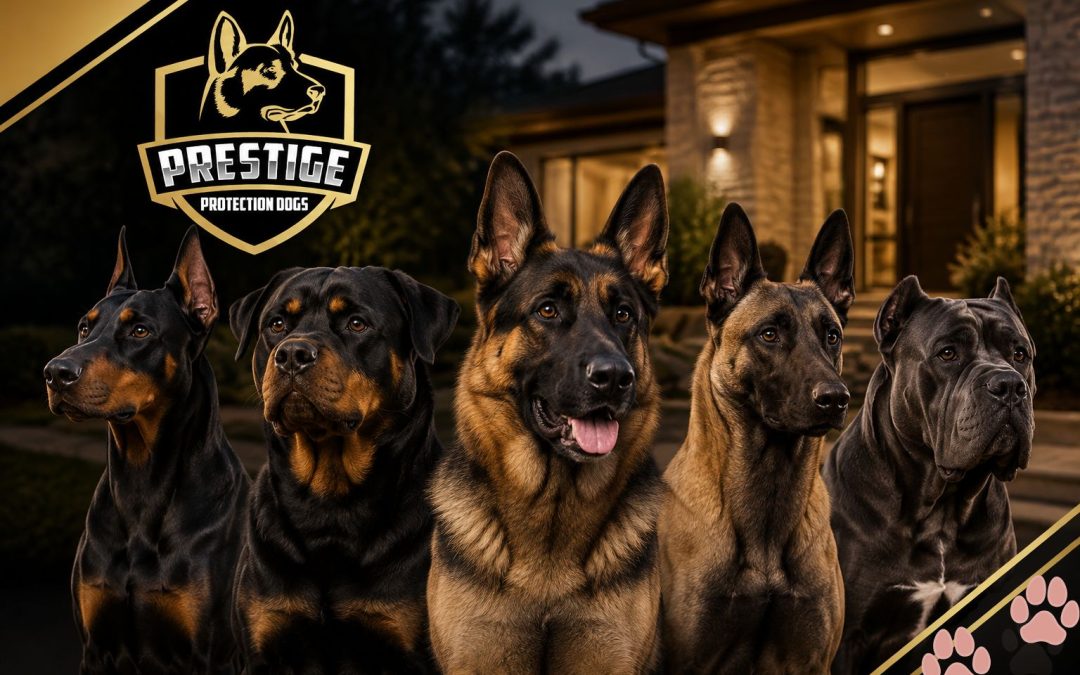
Certain breeds have been used for protection and guardian roles for generations because they consistently combine the traits listed above. Below are ten breeds most commonly selected for personal and executive protection work, roughly in order of how frequently they’re used in professional protection programs:
- German Shepherds — versatile working dogs bred for over a century for police, military, and personal protection roles; known for trainability and a strong desire to work alongside their handler.
- Belgian Malinois — smaller and more athletic than the German Shepherd, with intense drive and stamina; widely used by military and law enforcement units worldwide.
- Cane Corso — an Italian mastiff-type breed with a naturally imposing presence and strong guarding instinct, historically used to protect property and livestock.
- Dutch Shepherds — close relatives of the Belgian Malinois with a slightly more even temperament, often favored for their adaptability to both family life and working roles.
- Doberman — originally developed specifically as a personal protection breed; sleek, fast, and highly alert, with a strong loyalty bond to their handler.
- Rottweilers — powerful, confident dogs with a long history as guardians of livestock and property; calm by nature but capable of decisive action when needed.
- Giant Schnauzer — a lesser-known but highly capable guardian breed, intelligent and protective, originally bred to guard farms and drive cattle.
- Bouvier des Flandres — a large, sturdy herding-guardian breed from Belgium, known for a steady temperament and natural wariness of strangers.
- Boerboel — a South African mastiff-type breed developed specifically to guard homesteads, valued for its size, confidence, and territorial instinct.
- Presa Canario — a Spanish guardian breed with a serious, low-key temperament and a strong protective instinct toward its family.
Beyond individual breeds, some handlers and families opt for what the industry calls Executive K9s — dogs selected and trained specifically for high-profile or high-risk personal protection scenarios, where obedience, discretion, and the ability to work seamlessly around a family’s routine matter as much as raw capability.
Training Matters as Much as Breed
A common misconception is that a protection-breed dog is automatically a protection dog. In reality, breed only provides the raw material. What turns a dog into a reliable bodyguard is a structured training progression, which typically includes several distinct stages:
- Foundational obedience — reliable response to commands in low-distraction and high-distraction environments alike.
- Socialization — controlled exposure to people, animals, sounds, and environments so the dog doesn’t react unpredictably to normal stimuli.
- Bite work and controlled aggression — teaching the dog to engage only on command and to disengage immediately when told.
- Scenario-based training — simulated real-world situations, such as a stranger approaching a car or entering a home, so the dog learns to generalize its training.
- Ongoing maintenance training — protection skills, like any trained behavior, degrade without regular reinforcement, so most working dogs need continued sessions throughout their working life.
Here is also where you can see the difference between a family pet with a protective instinct and a professionally trained protection dog. A pet may bark at a stranger or position itself between a family member and a perceived threat, which is a guarding instinct. But a trained protection dog has been tested and conditioned to react reliably under real pressure, without freezing, panicking or reacting inappropriately.
Choosing the Right Protection Dog for Your Situation
Because the “best” breed depends heavily on the household, property, and risk level involved, it helps to think through a few practical questions before choosing a dog:
- Household composition: a family with young children may prioritize a breed known for a softer, more tolerant temperament, such as a Rottweiler or Bouvier des Flandres, over a higher-drive breed like a Malinois.
- Living environment: an apartment-dwelling family and a rural property owner have very different space, exercise, and containment needs.
- Experience level: first-time protection dog owners generally do better with a breed and a dog that has already received extensive professional training, rather than starting from a young, untrained puppy.
- Purpose: general household deterrence calls for a different profile than close personal protection for an individual who travels or has elevated security needs.
Because these decisions truly affect the family, the dog, and all the people the dog interacts with, it is worth working with a reputable, established source versus an unverified breeder or seller. That’s where a guide like the one offered by Prestige Protection Dogs comes in handy: It takes prospective owners thru breed selection, training verification and what a legitimate protection dog placement should look like, so buyers aren’t sold dogs that are marketed as “protection trained” without any documented testing behind the claim.
Prestige Protection Dogs is a German Shepherd breeder who is dedicated to educating families about what a stable, well-bred, properly trained personal protection dog really looks like before they make the decision to bring one home.
Living With a Protection Dog: What to Expect
Owning a personal protection dog is a long-term commitment that extends well beyond the initial training period. A few realities are worth knowing in advance:
- Exercise and mental stimulation needs are high: most protection breeds were bred for demanding working roles and don’t do well as purely sedentary pets.
- Continued handler involvement is required: the dog’s training is tied to the handler’s consistency, not a one-time program.
- Socialization doesn’t stop after puppyhood: ongoing, controlled exposure to new people and situations keeps a dog’s judgment sharp and its behavior predictable.
- Legal and liability considerations vary by location: some jurisdictions have specific rules around certain guardian breeds, which is worth researching before ownership.
A well-trained protection dog is, in the end, still a dog, one that needs structure, exercise, and a genuine relationship with its family. The protection element is a layer added on top of solid obedience and temperament, not a replacement for the everyday responsibilities of dog ownership.
Final Thoughts
There is no single “best” breed of bodyguard dog rather, there is a best fit for a particular family, property and risk profile. The German Shepherd, Belgian Malinois, Cane Corso, and Doberman are breeds that consistently top the list, because they combine trainability, physical capability, and temperament stability. However, the training and testing behind an individual dog are just as important as its pedigree.
Anyone thinking about a personal protection dog can benefit from researching both the breed and the training standards behind the specific dog being placed. Resources like the guidance available through Prestige Protection Dogs can help set realistic expectations before making that decision.
Frequently Asked Questions
1. What is the single best breed for a protection dog?
There isn’t one universal answer, German Shepherds and Belgian Malinois are the most commonly used due to their trainability and versatility, but the right choice depends on the household, experience level, and intended purpose.
2. Can any dog be trained for protection work?
Not reliably. While most dogs can learn basic guarding behaviors, formal protection work requires specific temperament traits, nerve stability, drive, and discernment, that not every dog possesses, regardless of training effort.
3. Are protection dogs safe around children?
Properly bred and trained protection dogs are generally very safe around children, since a core part of their training is distinguishing between real threats and normal household activity. Temperament testing before placement is key to this.
4. How long does it take to train a protection dog?
Comprehensive training typically takes 12 to 24 months, covering obedience, socialization, and scenario-based protection work, followed by ongoing maintenance training throughout the dog’s working life.
5. Is a guard dog the same as a personal protection dog?
Not exactly. A guard dog is generally trained to protect property and alert to intruders, while a personal protection dog is trained to protect specific individuals, follow commands in varied environments, and remain controllable in public and social settings.
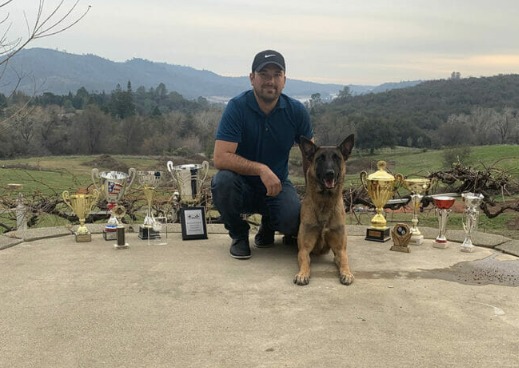
Spencer Bowman is a well established business owner, breeder, obedience trainer, and protection dog trainer with over twelve years of professional experience. He is the founder and owner of Prestige Protection Dogs, where he specializes in developing elite working dogs and offering a personal protection dog for sale to qualified clients. Spencer is the first American to qualify for the French Ring selectives with a self bred and fully trained dog, Lycan, achieving an average score of 374 out of 400 across five trials. He has also successfully trained and supported multiple teams in Mondio Ring and French Ring disciplines.