Prey drive makes a dog chase and bite; defense drive makes it respond to a real threat. A reliable protection dog needs both, in balance.
Buyers often ask me which protection dog is the most aggressive, and that’s a wrong question; it should be which drive fuels a dog.
Two dogs can look identical in a demo; one is chasing a thrill, and the other is reading a real threat; only one is safe around your children, guests, and daily routine. That gap is prey drive vs. defense drive. If you are browsing executive protection dogs for sale, understanding the difference will assist your decision.
What is Prey Drive in a Protection Dog?
Prey Drive is the urge to chase, grab, and bite; movement triggers it. Think of a running person, swinging tug, or a bouncing ball. Puppies show it early when they try to ambush your shoelaces. I treat prey drive as the foundation; it teaches a young dog to bite with confidence. It also feels good to the dog, so the drive becomes its comfort zone. After a stressful session, I move the dog back into prey to help it unwind. The AKC explains that this instinct lives in every dog to some degree; training can channel it, but it never fully disappears.
Prey drive alone is not protection; a dog stuck in prey fixates on the sleeve or toy. It plays the game instead of reading the person. That dog looks impressive in a demo and fails when the threat is real.
What is a Defense Drive in a Protection Dog?
Defense drive is the reaction to a perceived threat. Prey is more of a game, while defense is serious. The dog feels pressure and responds by pushing the threat away. Defense only works with strong nerves; a confident dog stays steady until danger is real. A nervous dog panics, bluffs, or runs. Dogs with thin nerves often bark hard and then back off once someone steps forward.
The best defense-driven dogs I know are quiet at a dinner party; they ignore the waiter and the neighbor, yet they react in a heartbeat when someone crosses a real line.
Many people believe guard dogs are best for defense because they bark and look intimidating; that is only half true. Barking is an alarm; real defense takes nerves, control, and good judgment.
Prey Drive vs. Defense Drive at a Glance
| Factor | Prey Drive | Defense Drive |
| Trigger | Movement | Perceived threat |
| Feels like | A game, comfortable | Serious, stressful |
| Role in training | Builds confidence and relieves stress | Builds real threat response |
| Main risk | Dog locks onto the toy | Weak nerves cause panic |
| Needs | Strong focus | Strong nerves and control |
Why Does the Balance Between the Two Matter?
Having an imbalance in drive creates predictable problems. Here is how each one shows up:
- Too much prey: The dog treats every situation like a game, so it may seize a sleeve and ignore a genuine threat.
- Too much defense: The dog has no healthy outlet for stress, so it can turn fearful or overreact.
- Weak nerves: The dog appears confident until real pressure arrives, and then it retreats.
The best protection dogs blend both drives; they carry the speed and focus of prey with the seriousness of defense. Many trainers call this blend: the fight drive. It combines the forward energy of prey with the intensity of defense, and it needs strong genetics plus experience. Most importantly, these dogs have nerves strong enough to switch off when the danger is gone.
The balance takes time to develop properly; if you rush a young dog into serious work, you end up with an unreliable, anxious adult. I explain the full timeline in my guide to when protection training should begin. Real protection work often starts between 18 months and 3 years.
How Do I Build the Right Balance in a Dog?
I start with genetics, because parents with proven working ability give a puppy its foundation. Then I train prey drive early with tugs, toys, and retrieving. Obedience training follows, including set sit-stays and down-stays. The puppy also experiences slippery floors, rough terrain, and children. Later, survival games prepare the dog for real pressure.
Every dog is evaluated before we call it a protection dog. We observe how it reacts to sudden noise and unfamiliar people. We test it on and off-leash, and proof it in many different environments. A dog that stays stable everywhere has earned its place.
What Should You Look For When You Buy a Protection Dog?
A good protector at home looks relaxed and composed. It stays quiet at dinner, remains gentle with children, and activates only when needed. For an executive, that also means staying relaxed in hotel lobbies and through long meetings. I cover this in my post on the best dog to have as a bodyguard. When you shop for a personal protection dog for sale, ask for proof of balance beyond a mere show.
Use this checklist:
- Calm at rest: The dog settles in public without constant correction.
- Rapid recovery: It recovers quickly from a sudden noise.
- A clear off switch: It drops drive on command.
- Stable with strangers: It is alert, not fearful or unpredictable.
- Proven lines: The parents show sound nerves under pressure.
Ask the trainer to demonstrate each trait in person. Also request the dog’s documented history, because proven performance under pressure matters more than a famous pedigree. A dog that cannot relax is not ready to protect.
Why Choose Prestige Protection Dogs for Balanced Drive?
We follow an order to develop drive and never rush a dog to close a sale. Spencer Bowman, the championship trainer and founder of Prestige Protection Dogs, has bred and trained working dogs for over a decade. Every dog we train is health-tested and matched to your household before placement. We deliver your dog in person and support you for life. Take a look at our executive protection dogs for sale and meet them yourself.
Conclusion
Prey drive builds the dog, and defense drive protects the family. Neither one works alone, and that balance is what we build in every dog we place. Choose a dog with strong nerves and a clear off switch, and ask to see both drives in person before you commit.
Frequently Asked Questions
1. What is the difference between prey drive and defense drive in dogs?
Prey drive is a dog’s natural instinct to chase, pursue, and grab moving objects, while defense drive involves responding to perceived pressure or threats. Both influence canine behavior, but neither alone determines whether a dog is suitable for personal protection work. Temperament, confidence, obedience, and control are also important.
2. Is high prey drive good for a protection dog?
High prey drive can be useful in protection dog training because it encourages engagement, motivation, and interest in reward-based activities such as tug and retrieving. However, excessive prey focus can make a dog overly interested in toys or movement. A suitable protection dog also needs sound nerves, obedience, and the ability to remain composed outside training.
3. Does high defense drive make a dog aggressive?
No. A strong defensive response does not automatically mean a dog is aggressive. Defense-related behavior can involve fear, uncertainty, confidence, or an attempt to create distance from something perceived as threatening. Proper temperament assessment and professional training help determine whether a dog can remain stable and controlled in different situations.
4. Can a dog have both prey drive and defense drive?
Yes. A dog can display both prey-related and defense-related behaviors. In working dogs, trainers evaluate how these responses interact with confidence, temperament, and obedience. The goal is not simply to increase both drives but to develop a stable, manageable dog that can respond appropriately to its environment.
5. What temperament should you look for in a personal protection dog?
Look for a dog with stable nerves, confidence, good recovery after unexpected experiences, reliable obedience, and the ability to settle in everyday environments. It should also be appropriately socialized and responsive to its handler. A professional behavioral and training assessment is more useful than judging a dog by aggression or appearance alone.
6. Can a dog with high prey drive become a protection dog?
A dog with high prey drive may have useful qualities for working-dog training, but prey drive alone does not make it suitable for protection work. Its overall temperament, health, confidence, defensive responses, social stability, and trainability must also be evaluated by an experienced professional.
7. Why is drive balance important when choosing a protection dog?
Drive balance matters because a protection dog must do more than chase or react to pressure. It should demonstrate confidence, control, reliable obedience, and the ability to relax when there is no threat. Evaluating these qualities helps buyers choose a dog that is better suited to their household, lifestyle, and protection requirements.
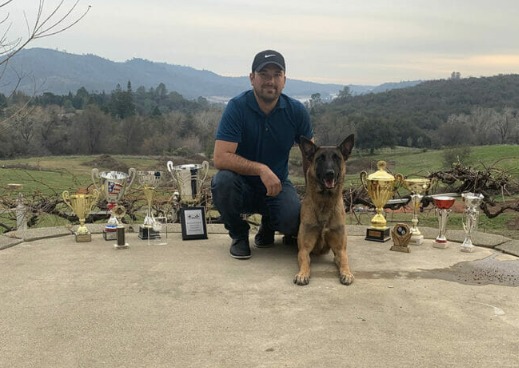
Spencer Bowman is a well established business owner, breeder, obedience trainer, and protection dog trainer with over twelve years of professional experience. He is the founder and owner of Prestige Protection Dogs, where he specializes in developing elite working dogs and offering a personal protection dog for sale to qualified clients. Spencer is the first American to qualify for the French Ring selectives with a self bred and fully trained dog, Lycan, achieving an average score of 374 out of 400 across five trials. He has also successfully trained and supported multiple teams in Mondio Ring and French Ring disciplines.