The direct answer would be to allow the spray to dry fully before your dog steps on the lawn. It usually takes about 2 to 4 hours. For a wide safety margin, I recommend giving it 24 to 48 hours.
Many people who come to us for executive protection dogs for sale call me the moment a lawn crew drives away. They want to know when the yard is safe again. In 2026, 2,4-D is still one of the most widely used weed killers. I have bred and trained dogs for over a decade and have compiled the blog as advice to every dog owner.
What Is 2,4-D and Why Does It Matter for Dogs?
2,4-D is a selective herbicide that targets broadleaf weeds such as dandelions and clover while leaving most grass alone. Homeowners and Farmers have relied on it since the 1940s, and well over a thousand products on the American market include it. Your lawn service may apply it without ever handling a bottle.
The National Pesticide Information Center points out that dogs can react more strongly to 2,4-D than many other animals. Pets that swallowed products containing it developed stomach upset, drooling, weakness, and, in serious cases, seizures. Timing is hence very important.
How Long Should You Keep Pets Off a Sprayed Lawn?
Product labels generally allow pets back once the treated area has dried completely. Drying often takes 2 to 4 hours. Sunshine and wind shorten that window, while shade, dew, and humidity stretch it out. This is how I break it down for clients.
| Situation | Label minimum | My advice |
| Warm, sunny, breezy day | Until fully dry | Wait 24 hours |
| Cool, shaded, or humid lawn | Until fully dry | Wait 24 to 48 hours |
| Rain or sprinklers wet the lawn again | Until fully dry | Wait 48 hours |
| Spot treatment on one patch | Until fully dry | Block it off for 48 hours |
Always check the label first, since products vary. The label sets the rule; my advice adds a cushion on top of it.
‘Dry’ Not Always Safe Enough
Dry grass looks harmless, but studies hint that residue can linger. In research reported by Science News Explores, scientists pulled clean cloth blocks across lawns. Traces of 2,4 -D kept passing onto the cloth for two full days, well after the grass felt dry to the touch.
The researchers also checked dogs that lived on those properties. Following the spraying, 19 of 25 dogs were passing the chemicals in their urine. A short wait, then, may not remove every bit of risk.
How Can 2,4-D Reach Your Dog?
Dogs investigate the world with their paws, noses, and mouths. Exposure typically happens through one of the three routes:
- Walking through damp grass and licking their paws or coats.
- Lapping up puddles or runoff on the lawn.
- Chewing on treated blades of grass.
Working dogs spend long stretches with their noses to the ground. When I train personal protection dogs for sale, I teach them to sweep yards and fence lines, which puts their paws and tongues right where chemicals settle. Breeds like the German Shepherd and Belgian Malinois, featured in our guide to the best home protection dog breeds, do this naturally.
Signs of 2,4-D Exposure in Dogs
Watch for these changes after any lawn treatment:
- Vomiting or diarrhea.
- Heavy drooling.
- Poor appetite.
- Unusual tiredness.
- Wobbly, unsteady walking.
- Seizures.
Call your veterinarian immediately if any of these are noticed. You can also contact the Pet Poison Helpline at (855) 764-7661 or the ASPCA Animal Poison Control Center at (888) 426-4435. Keep the product label handy.
What if Your Dog Already Walked on a Treated Lawn?
Staying calm and moving quickly is the best way to deal with the situation.
- Lead your dog off the grass right away.
- Wipe the paws, legs, and belly with a damp cloth. Use mild dog shampoo if the coat is wet.
- Block licking until your dog is clean.
- Write down the product name so your vet has it.
- Monitor your dog closely for the next 24 hours.
How Do You Keep Your Dog Safe After a Lawn Treatment?
A few simple habits go a long way:
- Ask your lawn service for the exact product name and label.
- Fence off the treated area and keep your dog leashed on a paved path.
- Mark treated zones with flags and kept everyone in the household informed about it.
- Wipe paws and bellies after walks near treated lawns.
- Never let your dog drink from lawn puddles.
Bigger properties raise the stakes. If you are shopping for executive protection dogs for sale, your home likely has acres to cover, gardeners, and several staff members. Everyone should follow the same treatment schedule. Our article on the best dog breeds for farm protection and ranches shows how dogs guard large properties.
When Should You Contact a Veterinarian?
If you suspect that your dog has been exposed to 2,4-D, the appropriate response depends on how the exposure occurred, the amount involved, and whether symptoms are present.
Contact a veterinarian promptly if your dog may have swallowed the herbicide, licked a concentrated product, or had substantial contact with a treated area. Do not wait for symptoms to appear if you suspect a significant exposure.
Watch for possible warning signs, including:
- Vomiting or diarrhea
- Excessive drooling
- Loss of appetite
- Unusual weakness or lethargy
- Staggering or difficulty walking
- Tremors or seizures
Seizures, collapse, or difficulty breathing require emergency veterinary care.
If your dog has pesticide residue on its paws or coat, move it away from the treated area and seek product-specific advice about cleaning the affected areas. Prevent licking while you arrange care, and keep the product container or label available so the veterinarian can identify the active ingredients and formulation.
Do not induce vomiting or give home remedies unless a veterinary professional specifically instructs you to do so. Early professional guidance can help determine whether decontamination, observation, or further treatment is necessary.
Why Choose Prestige Protection Dogs for a Healthy, Well-Trained Dog?
Every dog we raise is meant for a long, healthy working life, and that includes the care it gets at home. When you browse our executive protection dogs for sale, we will go over yard safety, handling, and daily routines with you before a dog ever comes home. Founder and champion trainer Spencer Bowman personally trains each dog for the job you need, delivers it, and guides you through every step.
Conclusion
Wait until the lawn is fully dry, then wait a little longer. A day or two is a small price to pay for your dog’s health, especially while the effects of repeated exposure are still being studied. Follow the label, ask your lawn service for details, and call a vet if anything seems off. If you are comparing personal protection dogs for sale, ask each trainer how they plan to support your dog’s care at home. The right program will answer without hesitation.
Frequently Asked Questions About 2,4-D and Dogs
1. How long does it take for 2,4-D to be safe for dogs?
Dogs should stay off a lawn treated with 2,4-D until the product has dried completely and all waiting periods specified on the label have been met. Drying time varies depending on the formulation, weather, and application method. Because residue may remain after grass feels dry, always follow the product label and consult your veterinarian if you are unsure about your dog’s exposure risk.
2. How long does 2,4-D herbicide stay in the soil?
The amount of time 2,4-D remains in soil depends on factors such as soil type, temperature, moisture, microbial activity, and the amount applied. Under some conditions, it can break down over days to several weeks, although persistence varies considerably. The time it takes to break down in soil is different from the time a treated lawn becomes suitable for pets. Follow the product label rather than relying on soil breakdown estimates to determine when your dog can return.
3. Is 2,4-D harmful to dogs?
Yes, 2,4-D can be harmful to dogs, particularly if they ingest the herbicide or a product containing it. Potential signs of exposure include vomiting, diarrhea, excessive drooling, weakness, and difficulty walking. The risk depends on the formulation, dose, and route of exposure. Keep dogs away from treated areas as directed on the label, and contact a veterinarian promptly if you suspect ingestion or notice concerning symptoms.
4. How long after spraying is it safe for pets?
There is no single waiting period that applies to every pesticide spray. For 2,4-D products, pets should generally remain off the treated area until it has dried completely and any additional restrictions on the product label have been satisfied. Some products may require a longer waiting period. Ask your lawn-care provider which product was applied and follow its specific instructions.
5. How long after herbicide can I let my dog out?
The time depends on the herbicide used, its formulation, and the label’s pet-reentry instructions. For liquid 2,4-D treatments, complete drying is often an important requirement, but it does not guarantee that all residue has disappeared. Keep your dog in an untreated area until the label’s conditions are met. If the product is unknown, contact the lawn-care provider before allowing your dog back onto the treated lawn.
6. How long is 2,4-D effective?
2,4-D primarily controls susceptible broadleaf weeds that are exposed to the treatment. How long its weed-control effects last depends on the formulation, application rate, weather, weed species, and whether new weeds emerge. It does not necessarily prevent future weed growth, and its effectiveness against existing weeds is different from how long residues remain in the environment. Follow the product label for application intervals and precautions around pets.
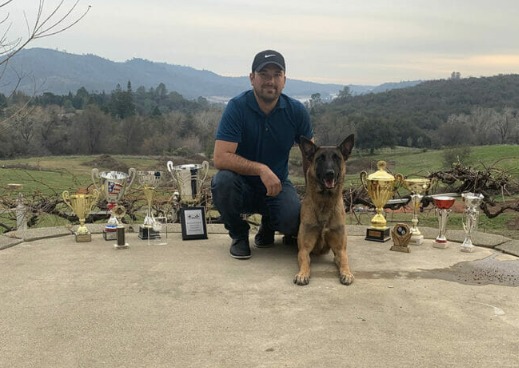
Spencer Bowman is a well established business owner, breeder, obedience trainer, and protection dog trainer with over twelve years of professional experience. He is the founder and owner of Prestige Protection Dogs, where he specializes in developing elite working dogs and offering a personal protection dog for sale to qualified clients. Spencer is the first American to qualify for the French Ring selectives with a self bred and fully trained dog, Lycan, achieving an average score of 374 out of 400 across five trials. He has also successfully trained and supported multiple teams in Mondio Ring and French Ring disciplines.