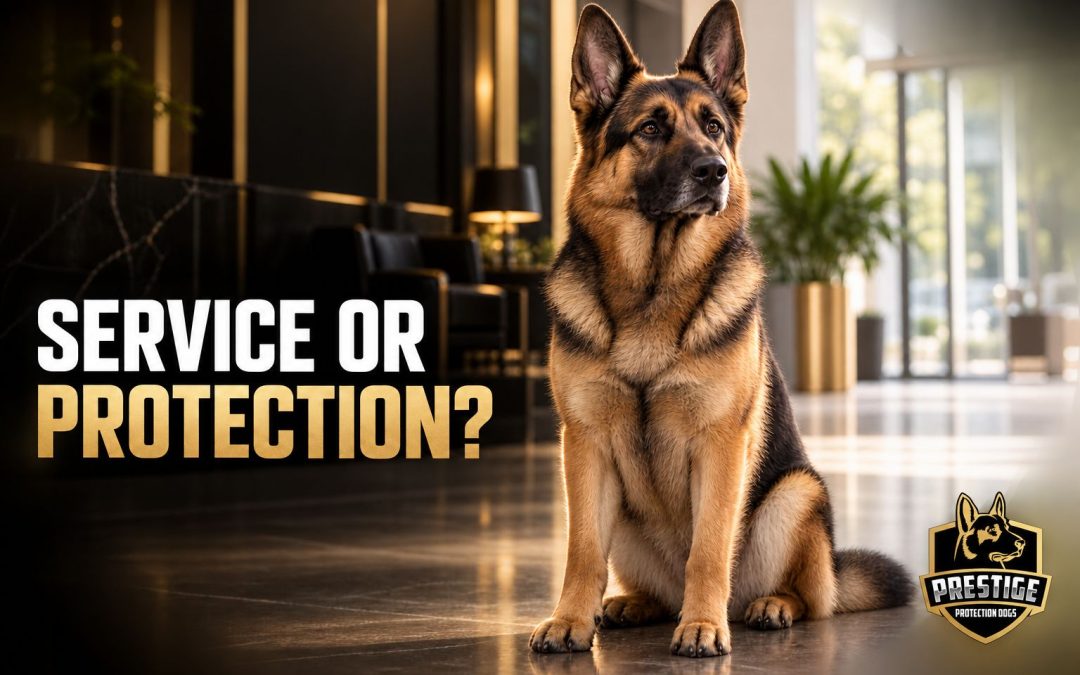
A watchdog raises the alarm, a guard dog stands its ground, an attack dog engages on cue, and a protection dog blends the best of each while staying under your command.
The three labels are tossed around as if they were interchangeable, and people often come to me with a purpose so that I can suggest the right dog for them. Choosing wrong can cost you money, safety, and sometimes a lawsuit. The blog is for all those scrolling through listings of protection dogs for sale to gain a clear understanding of what each term really means.
What Is a Watchdog?
A watchdog’s work is to notice trouble and announce it, and the dog never actually steps in. Its key traits include:
- Notices: Odd noises, strangers, or movement.
- Announces: It gives a loud, sharp bark
- Stop there: Its duty ends once you are alerted.
- Any Size: Volume counts, bulk does not.
Think of it as a living doorbell. A bark can discourage a casual trespasser, but it promises no defense against someone determined.
What Is a Guard Dog?
A guard dog holds its ground; it first tries to frighten a threat away with barking, growling, and a firm stance. It bites only when that fails. A guard dog needs:
- Specialized Training: It must distinguish friends from strangers.
- Steady nerves: IT must stay put under pressure.
- A skilled owner: Mistakes in training lead to serious injuries.
I advise against leaving any guard dog loose in a yard. It may get out or bite a harmless visitor.
What Is an Attack Dog?
An attack dog is conditioned to bite when told. A properly trained one also lets go the moment it is told. The release is required, and without it, the dog can become a hazard.
- Narrow use: Police, military, and specialist security.
- Weak home fit: A dog trained only in aggression can be unpredictable.
- Legal exposure: Some places restrict them, and insurers often shy away.
How Do the Four Roles Compare?
| Watchdog | Guard Dog | Attack Dog | Protection Dog | |
| Core task | Warns | Deters and confronts | Bites when told | Answers genuine danger |
| Reaction | Barks | Displays, then bites if needed | Engages on cue | Judges first, then acts |
| Training | Light | Specialised | Bite-centered | Advanced obedience plus protection |
| Owner command | Moderate | Varies | Must be total | Total |
| Suits families | Yes | Seldom | No | Yes, when well bred and raised |
| Legal exposure | Low | Moderate | High | Moderate, tied to control |
Where Does a Protection Dog Fit?
A protection dog works like a bodyguard. It is neither a doorbell nor a weapon; it lives in your home, rests quietly at dinner, and steps up only when needed. People searching for a personal protection guard for sale usually want this kind of protection.
- Warns the way a watchdog does.
- Deters the way a guard dog does.
- Engages only on cue or in true danger.
- Settles once the threat has passed.
I explain the temperament side in my guide to the best dog to have as a bodyguard.
Which Breeds Suit Each Role?
| Role | Typical Breeds |
| Watchdog | Miniature Schnauzer, Chihuahua, Dachshund, terriers |
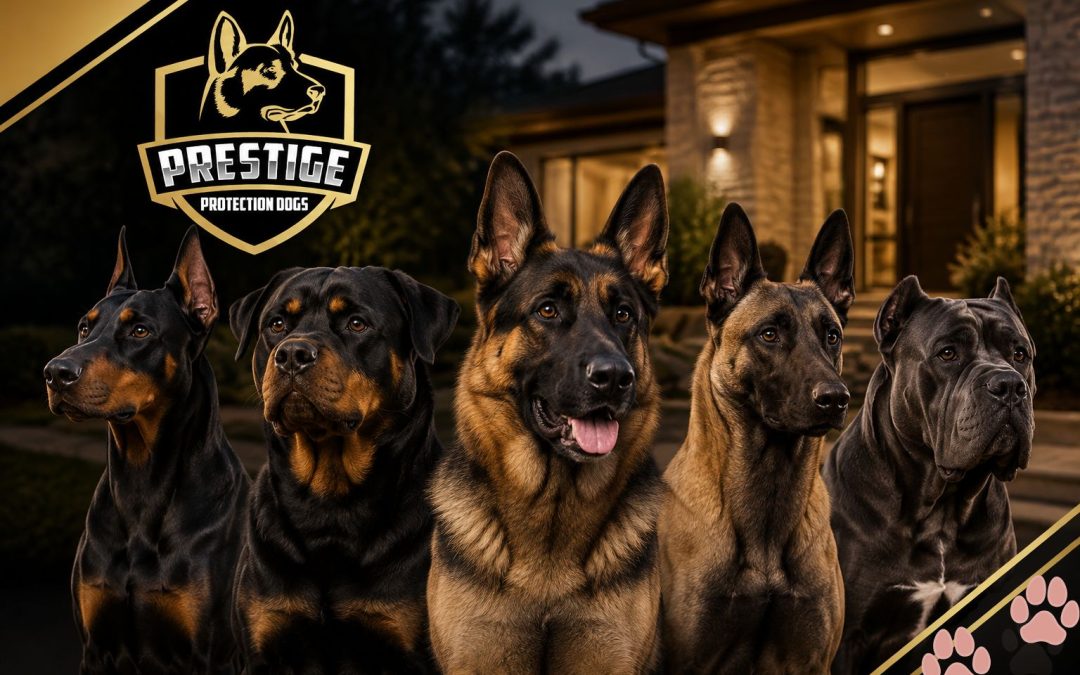
| Guard Dog | Giant Schnauzer, Rottweiler, Cane Corso, Doberman |
| Protection Dog | German Shepherd, Belgian Malinois, Doberman, Dutch Shepherd |
Breed is only a starting point; nerves, temperament, and training decide whether a particular dog can do the work. Two littermates can end up in different roles.
Which Type Matches Your Situation?
| Your Situation | Best Match | Reason |
| Apartment, early warning only | Watchdog | A bark is enough |
| Family home with children | Protection dog | Calm, steady, discerning |
| Executive, travel, high-risk work | Protection Dog | Goes everywhere under your control |
| Empty property, nobody home | Alarm system | A dog alone becomes a liability |
Parents and Families often ask me about family protection dogs for sale that stay gentle with kids and visitors. That describes a protection dog, not a guard or an attack dog. A good one stays quiet around children and switches on only when it counts.
What Are the Legal and Insurance Risks?
Dog liability is expensive. The Insurance Information Institute reports that dog-related injury claims cost U.S. homeowners insurers about $1.86 billion in 2025. The total came from roughly 28,450 claims, averaging about $65,450 each.
- Coverage Caps: Homeowners policies typically cover liability up to $100,000 to $300,000.
- Exclusions: In some states, insurers can drop the next coverage after a dog bite.
- Local rules: Check city and state restrictions before buying.
Call your insurer before bringing any working dog home.
How Can You Spot a Mislabeled Dog?
Do not confuse a noisy dog for a guard dog, and a guard dog for a protection dog. Test before you pay:
- Ask to watch the dog settle calmly in public
- Ask to see a release on command.
- Ask how it reacts to a stranger while you stand beside it.
- Ask for health tests and proven working lines.
When you compare Protection Dogs for Sale, proof matters more than a tough-sounding name. A dog that cannot relax is not ready to protect.
Guard Dog vs. Personal Protection Dog: What Is the Difference?
Guard dogs and personal protection dogs have related but different roles. A guard dog is generally trained or selected to help protect a property, business, or defined area. A personal protection dog is prepared to work more closely with an individual or family and respond to specific situations under handler direction.
Here are some important differences:
| Feature | Guard Dog | Personal Protection Dog |
| Main purpose | Property or area security | Protection of an individual or family |
| Working environment | Homes, businesses, and other properties | Homes, vehicles, and appropriate public settings |
| Handler relationship | May work around a property with a designated handler | Usually works closely with its primary handler |
| Training focus | Obedience, alertness, controlled property-related responses | Obedience, handler responsiveness, confidence, and controlled protection skills |
| Lifestyle considerations | Depends on property and working environment | Requires regular interaction and involvement in the handler’s daily routine |
The terms can overlap, and some dogs are trained for both roles. The right choice depends on the type of protection needed, the dog’s individual capabilities, and the owner’s experience and lifestyle.
Choose Prestige Protection Dogs for All Three Strengths in One Dog
A watchdog gives you the warning, a guard dog gives you the deterrent, and an attack dog gives you the bite. A protection dog carries all three, and I add what the others lack: control. Our Protection dogs warn early, deter by presence, and act only on command or in the presence of a real threat. Here is how champion trainer and founder Spencer Bowman builds that:
- Selection: We choose parents with proven nerves and working ability.
- Foundation: Obedience, impulse control, and calm in public come first.
- Protection Phase: Bite work and release on command start only when the dog is mature.
- Proofing: We test every dog around strangers, children, and crowds.
- Matching: We train for your routine, home, and travel.
As a certified French Ring and Mondio decoy, Spencer knows how to test a dog under pressure. He personally trains each dog, delivers in person, and backs it with lifetime support. Take a look at our personal protection guard dogs for sale and meet them yourself.
Conclusion
A protection dog balances all three under your command – warning, deterrence, and attack.
Match the dog to the job, confirm your insurance, and ask every seller for proof. For a home with children, start with family protection dogs for sale that have been tested with kids.
Frequently Asked Questions
1. What is the main difference between a guard dog and a watchdog?
A watchdog primarily alerts its owner by barking when it notices unfamiliar people, unusual sounds, or suspicious activity. A guard dog has a broader security role and may be trained to respond to specific situations under handler direction. The main difference is their purpose and level of training.
2. Is a protection dog the same as an attack dog?
No. A protection dog is trained to help protect an individual or property while remaining responsive to its handler. The term “attack dog” generally refers to a dog trained for specialized operational tasks involving controlled physical engagement. A well-trained protection dog should also demonstrate obedience, control, and the ability to disengage when commanded.
3. Are guard dogs safe around children and families?
Some guard dogs can be suitable for family environments, but suitability depends on individual temperament, socialization, training, and household management. Children should always be supervised around dogs, and families should choose a dog that has been professionally assessed for their specific living situation.
4. What is the best type of dog for home protection?
The best dog for home protection depends on your property, lifestyle, experience, and security needs. German Shepherds, Belgian Malinois, and Rottweilers are among the breeds commonly associated with protection work. However, individual temperament, health, obedience, and professional training matter more than breed alone.
5. Can a family dog also become a protection dog?
Some family dogs may have the temperament and characteristics needed for protection training, but not every dog is suitable. A qualified professional should assess the dog’s confidence, stability, sociability, health, and obedience before recommending specialized training.
6. Do protection dogs require professional training?
Yes. Protection training requires specialized knowledge, structured practice, and careful handling. Professional training helps develop obedience, handler responsiveness, environmental confidence, and controlled behavior. Owners also need ongoing guidance and regular practice to maintain these skills.
7. What should I consider before buying a protection dog?
Before purchasing a protection dog, consider its temperament, health records, training history, socialization, and suitability for your household. Ask the provider about handler training, ongoing support, and how the dog behaves around visitors, children, and everyday distractions. Choose a reputable provider that is transparent about the dog’s abilities and limitations.
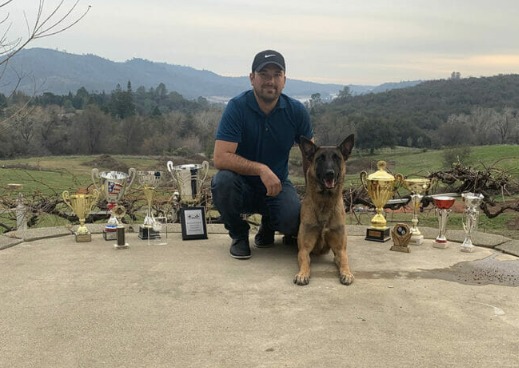
Spencer Bowman is a well established business owner, breeder, obedience trainer, and protection dog trainer with over twelve years of professional experience. He is the founder and owner of Prestige Protection Dogs, where he specializes in developing elite working dogs and offering a personal protection dog for sale to qualified clients. Spencer is the first American to qualify for the French Ring selectives with a self bred and fully trained dog, Lycan, achieving an average score of 374 out of 400 across five trials. He has also successfully trained and supported multiple teams in Mondio Ring and French Ring disciplines.