Training a Doberman requires consistency, control, and dedication. Is your top concern whether the Doberman Pinscher is easy to train? Then the answer is yes and no. The velcro dogs are intelligent, energetic, and people-pleasing; a combination of traits that makes them trainable. On the other hand, they decide who to listen to and when to listen to them.
During my professional career, I have encountered Doberman Pinscher training techniques with distinct personalities and behavioural patterns. However, most of them possess certain traits and attributes that can be manipulated while training. As an experienced protection dog trainer, I would recommend a few tips and techniques to train a Doberman.
Why Early Doberman Training Matters
Dobermans rank highly in canine intelligence, among the most intelligent working breeds. With that intelligence however, comes a great ability to learn bad habits just as quickly as they can learn good ones. Beginning training early can establish good behaviors before bad habits become second nature to change. Early training also builds confidence and establishes communication between you and your dog from a young age. You’ll also be able to set your expectations for him from the start.
Good training also rewards calm manners around family, guests, and other pets. As your Doberman grows, the foundation you’ve set as a puppy will be built upon with advanced obedience as well as protection training and dependable behavior. The more you put into training your puppy early, the easier every lesson will be after that.
Start right
Ensure that you always pick from Doberman Protection Dogs for Sale offered by reliable breeders. As a protection dog trainer myself, I suggest that potential dog owners do their homework. Always speak to the breeders or companies providing trained or puppy Dobermans. Ask them the right questions and check the dog’s health and genetic proof. Even with the best of socialisation and training, poor temperament due to genetics can put you and your dog at risk. So, a good breeder is equally important.
AKC (American Kennel Club) recommends the following training structure for your puppies or dogs younger than a year.
| 8 Weeks to 16 Weeks | Smart Socialisation |
| 16 Weeks to 6 Months | Managing puppy biting |
| 6 Months to 12 Months | Impulse Control |
- Introduce your doberman puppy to different situations and a variety of surfaces, but in a controlled manner. The first few months of a puppy’s socialization must include good exposure and experiences. Teach them to greet politely, have a dog mentor, perhaps. Our facility uses this period to introduce house, crate, attention, and recall training to the puppies.
- The first 6 months of a puppy are ideal for initiating basic obedience training. I cannot highlight the need for a lot of sleep for puppies.
- The first year is the best time to teach your dogs impulse control, and how do we do that? By building on the attention training and teaching your dog to focus on you. Make it a rewarding experience for your doberman to be by your side.
Essential Commands Every Doberman Should Learn
Every Doberman should master a set of basic obedience commands before progressing to advanced training. These commands improve safety, strengthen communication, and create a well mannered companion.
Sit
Teaching “Sit” is one of the first steps in obedience training. It encourages your Doberman to remain calm before meals, greetings, walks, and other daily activities.
Stay
The “Stay” command builds patience and impulse control. It helps keep your dog safe in busy environments and prevents them from rushing toward distractions.
Come
A dependable recall command is one of the most valuable skills any Doberman can learn. Practice in distraction free environments before gradually increasing the difficulty.
Heel
Teaching your Doberman to walk calmly beside you prevents pulling and makes daily walks safer and more enjoyable.
Leave It
This command teaches your dog to ignore food, objects, or distractions that could be dangerous or inappropriate.
Place
The “Place” command encourages your Doberman to remain calmly on a designated bed or mat until released. It is particularly useful when guests visit or during family activities.
I’m often asked the question: How long does it take to train a Doberman Pinscher? Well, it depends on what kind of training you seek for your dog. Protection dog training varies from 6 months to about 2 years for a fully trained dog. Based on on-leash obedience training, bite work can be taught in about 6 months.
Positive Reinforcement Builds Lasting Results
Dobermans are great with positive reinforcement since they like to work for their owners. Treats, praise, toys and play are great rewards for your dog when it does something you want it to. Rather than punishing your dog when it does something wrong, reward it when it does something right.
Your dog will learn to repeat behaviors that gain it praise or a treat willingly. By using clear communication and positive reinforcement, along with patience and consistency, you will gain your dog’s trust. Your dog will become a confident canine that loves learning new things. Plus, positive reinforcement can help you create a stronger bond with your Doberman.
Tips and techniques to Train Doberman Guard Dogs
Bring In The Tough Guy, You Be The Alpha!
Dobermans are the only dogs bred for protection as their core purpose. Karl Friedrich Louis Dobermann, a tax collector, bred Dobermans to keep himself guarded while collecting taxes. They are the result of the best protection and working dogs. So, instinctively, they look up to an individual to receive commands. To train a doberman correctly, we need to prove our worth by listening to or following instructions.
Dobermans look up to powerful, reliable leaders. Here I share a few easy ways for us, Doberman owners, to be seen as Alpha by our dog.
- Dobermans are very much in tune with human emotions and can sense a lot through our demeanor. You must stay calm, focused, and in charge around your doberman. So maintaining an Alpha attitude is important.
- I follow frequent obedience training for my dobermans by keeping myself in the Alpha spot. We can always ask our dogs to perform or follow a command just before offering them food. The person offering food is perceived as someone in charge or in control.
- Take the lead. Train your dogs to wait for you to walk out of a doorway, then follow. Every time you reinforce such behaviours, you are reminding your dogs that you are in charge.
- Follow a regular schedule of obedience training. A doberman sees me as an instructor and attentively waits for the command. It is a powerful way to position yourself as an Alpha.
- Do not fall for the puppy eyes drawn by your smart dobies. Stick to the boundaries defined; never change your mind.
Combine Audio-Visual Cues
I advocate using appropriate body language to train dogs. Dobermans are very attentive learners, focusing on every move and command by the instructor. For instance, you can swing your hand while instructing them to run or fetch, and similarly point your finger to the ground when commanding them to sit.
Real Mental Exercise- Teaching Them To Stay Focused
Training a dog to remain focused and concentrated despite distractions around tires them out. Instruct them to lie down or sit still when they are hyper. They will have to resist the drive and impulses to remain calm or focused, and the brain drains a lot of energy.
Numerous trainers, including us, use all the techniques mentioned above. We also understand the limitations of house training, and we are here to guide and build a healthy relationship between you and your dobie.
When Should You Work With a Professional Trainer?
Basic obedience can easily be taught at home by most owners. However, if you want to progress faster or if your dog has behavioral issues, you may want to enlist the help of a professional trainer. If your Doberman has behavior problems such as aggression, extreme anxiety, lack of recall, over-reactivity or if you wish to train for personal/family protection, you should strongly consider finding someone who has experience training Dobermans.
A professional can assess your dog’s temperament and pinpoint exactly what you are trying to accomplish. Then they will map out a plan on how to get there. The earlier you can address a behavior, the better chance you have of it not becoming a lifetime behavior.
Trained Dobermans from Prestige Protection Dogs
Ranging from Belgian Malinois, Cane Corso, Doberman, and German Shepherd, Spencer Bowman has trained numerous dogs throughout his professional career. Our facilities and expert staff offer training that identifies and regards a pattern in each dog. We convert the uniqueness into an advantage. We follow a structured approach refined over the years to produce excellent working line dogs for your protection needs.
We are premium and elite providers of Protection Dogs worldwide. Most of our leads have been from the customers we have served. We have gained the best word-of-mouth for the quality of our protection dogs’ training. Choose us for your trained Dobermans and other protection dogs.
Conclusion
A professional can come to help any day if you are having trouble training or keeping your dog in control. I have trained Personal Protection Dobermans across the world. Prestige Protection Dogs is the result of my experience and knowledge. We provide the best companionship and protection for our clients.
Frequently Asked Questions
How hard is it to train a Doberman Pinscher?
Doberman Pinschers are highly intelligent and eager to learn, making them easier to train than many breeds. However, they require consistency, patience, and regular mental stimulation. With proper guidance and positive reinforcement, most Dobermans excel in obedience and advanced training.
What not to do with a Doberman?
Avoid using harsh punishment, inconsistent rules, or skipping socialization. Do not leave your Doberman without enough exercise or mental stimulation, as boredom can lead to unwanted behaviors. Positive, structured training produces the best results.
At what age do Dobermans start guarding?
Dobermans often begin showing natural protective instincts between 6 and 12 months of age. However, formal protection training should only be introduced after a solid foundation of obedience and socialization has been established under professional guidance.
What should I train my Doberman to do?
Start with essential commands such as sit, stay, come, heel, down, leave it, and place. As your Doberman progresses, you can introduce leash manners, recall, impulse control, advanced obedience, and protection work if appropriate.
Where should a Doberman sleep at night?
A Doberman should sleep in a safe, comfortable area inside the home, such as a crate or dog bed placed in a quiet room. Since Dobermans form strong bonds with their families, they generally prefer sleeping indoors rather than being left outside.
What is the downside to Dobermans?
Dobermans require significant time, exercise, and consistent training. Without proper socialization and mental stimulation, they may develop anxiety, destructive behaviors, or excessive barking. Their strong protective instincts also make responsible ownership essential.
Can a Doberman be left alone for 8 hours?
An adult Doberman may tolerate being alone for up to 8 hours occasionally, but it should not become a daily routine. Dobermans thrive on companionship and regular interaction. Providing exercise, enrichment toys, and breaks during the day can help prevent boredom and separation related behaviors.
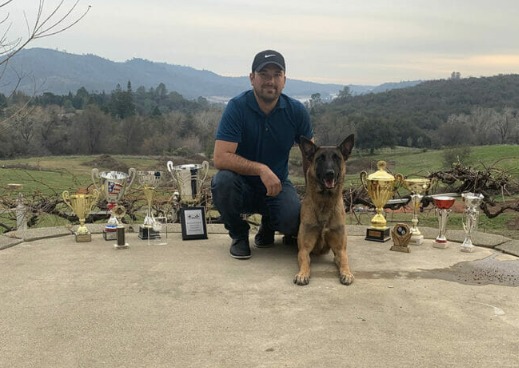
Spencer Bowman is a well established business owner, breeder, obedience trainer, and protection dog trainer with over twelve years of professional experience. He is the founder and owner of Prestige Protection Dogs, where he specializes in developing elite working dogs and offering a personal protection dog for sale to qualified clients. Spencer is the first American to qualify for the French Ring selectives with a self bred and fully trained dog, Lycan, achieving an average score of 374 out of 400 across five trials. He has also successfully trained and supported multiple teams in Mondio Ring and French Ring disciplines.